Lo Spot della nuova Ford Focus e gli insegnamenti di Drucker sul management
Get link
Facebook
X
Pinterest
Email
Other Apps
Quando ho visto per la prima volta lo spot della nuova Ford Focus, nella quale i musicisti di un'orchestra suonano con strumenti chiaramenti ricavati da parti dell'auto, mi è tornato automatico ricollegare le immagini all'insegnamento di Peter Drucker, inventore delle teorie di management contemporanee, che sostanzialmente dice che: "oggi l'organizzazione aziendale assomiglia molto all'orchestra sinfonica".
Andare allo stesso ritmo altro non è che condividere regole e obiettivi comuni. L'armonia è l'integrazione organizzata di contributi differenti, fondamentale in un'orchestra quanto in un'azienda. E costruire una melodia richiede la stessa creatività e coraggio di proporre un nuovo prodotto o una nuova strategia.
D'altra parte, anche dirigere un'orchestra è arte manageriale che comporta rispetto, fiducia, doti di leadership e soprattutto "pregiudizio positivo" nei confronti di tutti i musicisti.
Questa teoria sembra ormai superata da quando si inizia a considerare una nuova metafora, nella quale, il lavoro di organizzazione è paragonato ad un concerto jazz. Erika Leonardi spiega l'idea nel suo libroAzienda in Jazz:"Una stravagante metafora, che propone l'universo musicale del jazz come modello di una gestione organizzativa armonica, a cui l'azienda di oggi potrebbe ispirarsi, mirando non solo al profitto, ma anche all'innovazione e, non ultimo, a una maggiore soddisfazione individuale. La musica jazz, il suo ritmo, la sua imprevedibile ma studiata articolazione diventano una preziosa chiave di lettura del mondo del lavoro: i legami tra le persone a livello di gruppo e in rapporto al leader, la relazione tra competenze e creatività, l'equilibrio fra la logica dei processi e la flessibilità dell'organizzazione, l'originalità dei risultati e l'apertura al cambiamento". In sintesi, nel panorama Jazz l'improvvisazione è fondamentale. Oltre all'armonia, dev'essere ricercata in maniera costante la parte di spicco di ogni dipendente in modo da sfruttare la creatività e la potenzialità di ognuno al massimo.
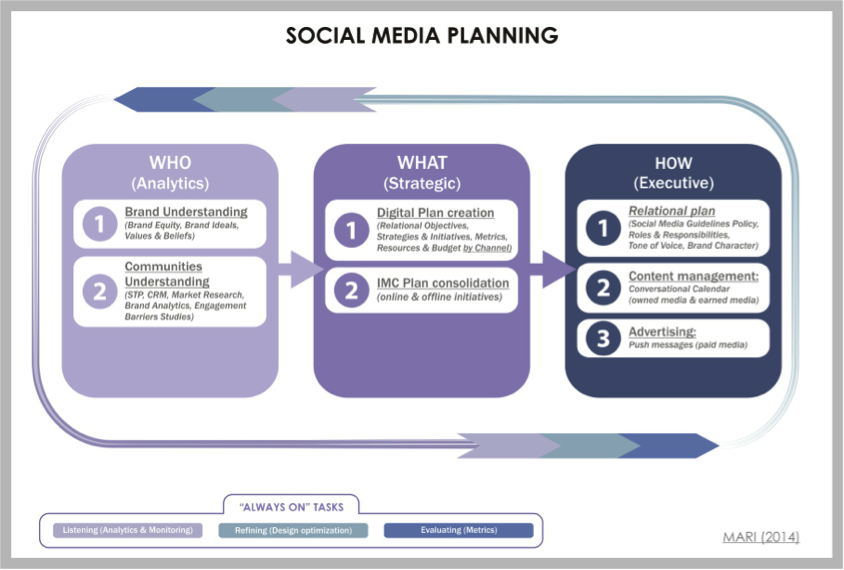
As a Social Media Manager , you are responsible to ideate and implement a social media plan. Similarly to any other plan, this should be composed by three main parts: analytic (WHO) , strategic (WHAT), and executive (HOW) . The definition of your social media strategy starts with the understanding of your brand and the communities you wants to reach. The WHO phase tries to capture all the information related to heritage of your brand, its equity, shared values, beliefs and most importantly of the brand ideals on which your content strategy will be centered (see my previous article ‘Brand Ideals definition’) . A sophisticated understanding of your brand naturally leads you to the analysis of your communities. Previously generated marketing documents that aim at facilitating managers’ understanding of your stakeholders and brand positioning should be properly reviewed ah...
Marketing professionals face increasing complexity due to the explosion of digital and data touchpoints, as well as unprecedented consumers’ expectations in terms of interaction, content, and offer personalization. They came to realize that Machine Learning (ML) is the only possible way to cope with this level of complexity. Machine learning is developing under the great promise that marketing can now be both more efficient and human . The diffusion of intelligent models can be noticed in three key areas : 1. Inside Marketing Technologies ML is powering many of the marketing software (enterprise solutions, individual tools or apps) that marketers require to turn the vast array of historical data into actionable insights. “AI algorithms and technologies are going to be deeply embedded at every layer of what the marketing software is.” - Scott Brinker, VP Platform Ecosystem at HubSpot Figure 1. Marketing and AI Technologies dependencies Companies receive bo...
1. Every brand lover regularly uses a set of brands from several product categories to express his or her personality. Brand lovers have a simultaneous emotional connection with multiple brands in their daily life. Brand communities will no longer form around a single brand (e.g. Nutella) but around a network of brands (e.g. Nutella + Apple + Mini + Gucci). 2. Brands see themselves at the very center of a relationship with thousands - if not millions - of consumers. A Brand Manager needs to realize the limited importance that people attribute to a single brand. Brands will no longer be the focal point of brand community, single consumers with their sophisticated consumption habits will. 3. People out there have brand preferences that are similar to yours and current technology allows us to bring these invisible links to life enabling the creation of communities...

Comments