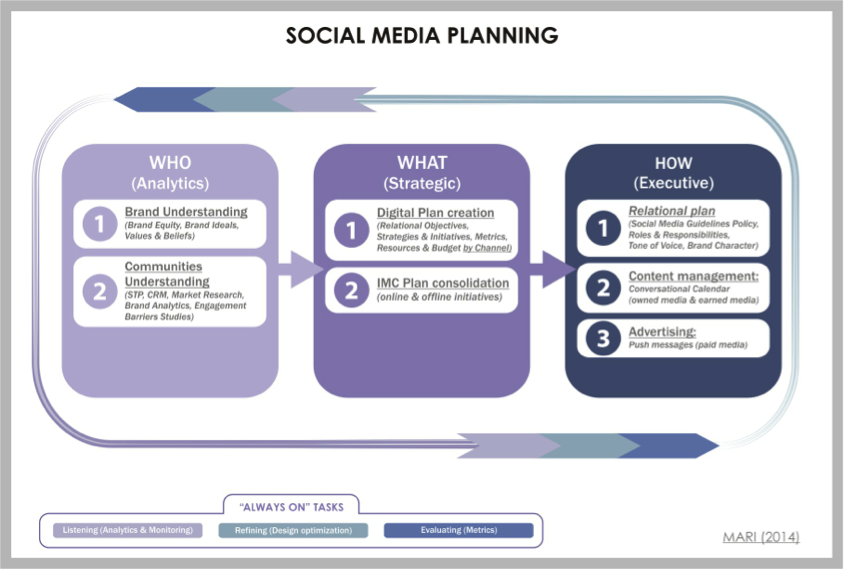
As a Social Media Manager , you are responsible to ideate and implement a social media plan. Similarly to any other plan, this should be composed by three main parts: analytic (WHO) , strategic (WHAT), and executive (HOW) . The definition of your social media strategy starts with the understanding of your brand and the communities you wants to reach. The WHO phase tries to capture all the information related to heritage of your brand, its equity, shared values, beliefs and most importantly of the brand ideals on which your content strategy will be centered (see my previous article ‘Brand Ideals definition’) . A sophisticated understanding of your brand naturally leads you to the analysis of your communities. Previously generated marketing documents that aim at facilitating managers’ understanding of your stakeholders and brand positioning should be properly reviewed ah...
Marketing professionals face increasing complexity due to the explosion of digital and data touchpoints, as well as unprecedented consumers’ expectations in terms of interaction, content, and offer personalization. They came to realize that Machine Learning (ML) is the only possible way to cope with this level of complexity. Machine learning is developing under the great promise that marketing can now be both more efficient and human . The diffusion of intelligent models can be noticed in three key areas : 1. Inside Marketing Technologies ML is powering many of the marketing software (enterprise solutions, individual tools or apps) that marketers require to turn the vast array of historical data into actionable insights. “AI algorithms and technologies are going to be deeply embedded at every layer of what the marketing software is.” - Scott Brinker, VP Platform Ecosystem at HubSpot Figure 1. Marketing and AI Technologies dependencies Companies receive bo...
1. Every brand lover regularly uses a set of brands from several product categories to express his or her personality. Brand lovers have a simultaneous emotional connection with multiple brands in their daily life. Brand communities will no longer form around a single brand (e.g. Nutella) but around a network of brands (e.g. Nutella + Apple + Mini + Gucci). 2. Brands see themselves at the very center of a relationship with thousands - if not millions - of consumers. A Brand Manager needs to realize the limited importance that people attribute to a single brand. Brands will no longer be the focal point of brand community, single consumers with their sophisticated consumption habits will. 3. People out there have brand preferences that are similar to yours and current technology allows us to bring these invisible links to life enabling the creation of communities...




Comments